Cool Features You Can Add to Your Concrete Surfaces — Farmington Concrete

Grant Cool • July 14, 2026

Concrete has come a long way from the plain gray slab most people picture. Today it's one of the most creative surfaces you can bring into your home—capable of mimicking stone, glowing with embedded glass, or warming your feet on a cold morning. If you think of concrete as basic, you're about to be surprised. At Farmington Concrete, we help homeowners transform ordinary concrete into standout features that fit their style and their space. In this post, you'll discover the coolest add-ons and design options available for concrete surfaces, from decorative finishes and embedded objects to custom coloring, engraving, epoxy coatings, radiant heating, and edge profiles. You'll also get practical tips for each, answers to common questions, and a clear next step for bringing your ideas to life.


Here's what we'll cover:

  • Decorative finishes that change the entire look
  • Embedded objects for a one-of-a-kind surface
  • Custom coloring options
  • Engraving, patterns, edge profiles, and functional upgrades like heating


Decorative Finishes That Transform the Look

The finish you choose sets the tone for the whole surface. These three options are the most popular for a reason.


Stamped Concrete

Stamped concrete uses molds pressed into fresh concrete to mimic brick, slate, cobblestone, wood planks, and more. You get the look of premium materials at a fraction of the cost, without the grout lines or shifting pavers. It's a favorite for patios, driveways, and walkways.


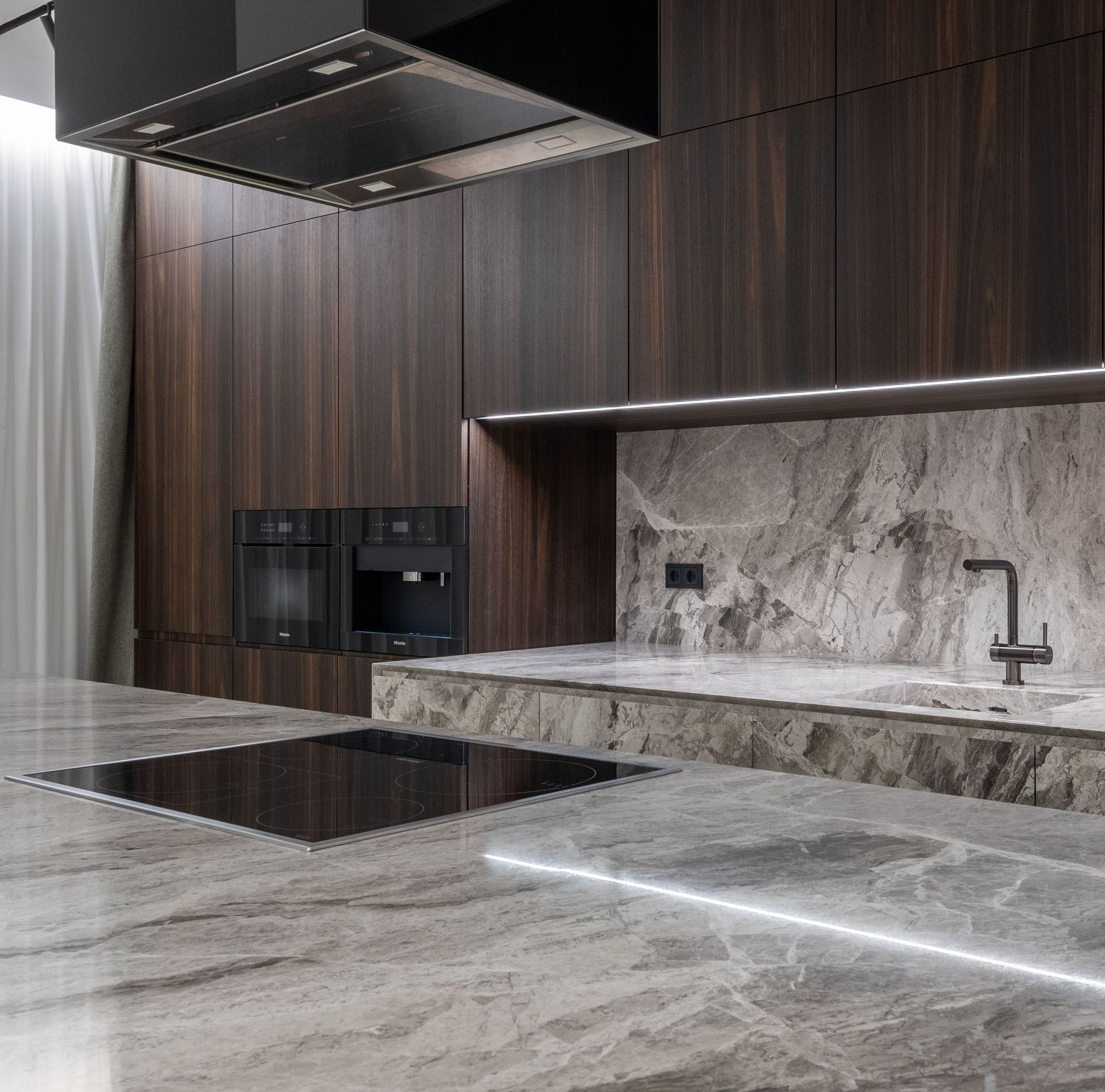
Exposed Aggregate

This finish reveals the natural stones within the concrete for a textured, pebbled surface. Beyond looking great, it offers excellent slip resistance, which makes it a smart pick for pool decks and outdoor steps.


Polished Concrete

Grinding and polishing the surface creates a sleek, glossy finish with real depth. Polished concrete is low-maintenance, resists stains, and brings a modern, refined edge to floors indoors. Practical tip: Match the finish to how you'll use the space. Smooth polish suits interior floors, while textured exposed aggregate is safer where things get wet.


Embedded Objects for a One-of-a-Kind Surface

Want a surface no one else has? Embedding objects into concrete makes that possible. During the pour or finishing stage, we can set materials right into the surface for a truly custom look.

  • Stones and pebbles for a natural, organic feel
  • Recycled or colored glass that catches the light and adds sparkle
  • Seashells for a coastal, personal touch
  • Tile fragments or metal accents for artistic detail


Embedded features work beautifully as focal points—think a decorative border, a countertop with glimmering glass, or a patio inlay that becomes a conversation piece. Practical tip: Objects near the surface need proper sealing to stay secure and protected. This is precise work best handled by a professional to avoid loose or uneven results.


Custom Coloring Options

Color is where concrete really becomes yours. There are three main ways to add it, each with its own effect.


Integral Pigments

Pigment is mixed into the concrete before it's poured, running color all the way through the material. The result is a consistent, lasting tone that won't fade or chip away over time.


Acid Staining

Acid stains react chemically with the concrete to create rich, variegated, marbled tones. No two stained surfaces look exactly alike, giving you depth and character that's impossible to replicate.


Dyes

Concrete dyes offer bold, vibrant, and precise color options. They're great when you want a specific shade or a more uniform, saturated look. Practical tip: Combine methods for stunning results—an integral base color with acid-stain accents, for example. We can show you samples so you know exactly what to expect before we commit.


Engraving and Custom Patterns

Engraving cuts designs, borders, or patterns directly into cured concrete. It's a subtle but striking way to personalize a surface. Popular options include geometric patterns, tile-look grids, medallions, and even custom logos or family monograms. Engraving pairs especially well with staining, since the cut lines and color work together to define the design. Practical tip: Engraving works on both new and existing concrete, so you can refresh a plain slab you already have without a full replacement.


Epoxy Coatings for Style and Protection

Epoxy coatings do double duty: they look fantastic and protect the surface underneath. Applied over concrete, epoxy creates a durable, seamless layer that resists stains, chemicals, and abrasion.

The design possibilities are impressive:

  • Metallic epoxy with swirling, three-dimensional depth
  • Flake or chip systems for a speckled, textured look
  • Solid colors for a clean, glossy finish


Epoxy is a top choice for garage floors, basements, and high-traffic areas where durability matters as much as looks. Practical tip: Surface prep makes or breaks an epoxy job. Proper cleaning, etching, and curing are essential for a coating that lasts—another reason to trust professional installation.


Radiant Heating Beneath Concrete

Here's a feature that turns concrete from cool to cozy. Radiant heating systems install beneath the surface, warming the concrete from below and radiating comfortable heat into the room. It's an efficient way to heat floors evenly, eliminate cold spots, and enjoy warm surfaces underfoot on chilly mornings. Because concrete holds heat well, it's an ideal partner for radiant systems. Practical tip: Radiant heating has to be planned before the pour, so bring it up early in the design conversation. Retrofitting later is far more difficult and costly.


Custom Edge Profiles

Edges are easy to overlook, but they shape how finished a surface feels. Custom edge profiles let you define the border of countertops, patios, and steps. Options range from clean, square modern edges to rounded bullnose profiles and decorative chiseled or beveled looks. The right edge ties the whole design together and adds a polished, intentional touch. Practical tip: Consider function alongside style. Rounded edges are safer in homes with small children, while crisp square edges lean contemporary.


Common Mistakes to Avoid

A few missteps can undercut even the best design ideas. Keep these in mind:

  • Skipping the sealer. Decorative finishes, colors, and embedded objects all need proper sealing to stay protected and vibrant.
  • DIY on complex features. Stamping, embedding, and epoxy require skill and timing. Rushed or amateur work often shows.
  • Planning heating too late. Radiant systems must be installed before the pour—decide early.
  • Ignoring the setting. Choose finishes and colors that complement your home and hold up to how the space is used.


Frequently Asked Questions

Can these features be added to existing concrete?
Some can. Engraving, staining, epoxy coatings, and polishing often work on existing surfaces. Others, like embedded objects, stamping, and radiant heating, need to be done during a new pour.


Which decorative finish is most durable?
All hold up well when sealed properly. Epoxy and polished concrete are especially tough for high-traffic areas, while stamped and exposed aggregate excel outdoors.


Do colored or decorative surfaces need special maintenance?
Not much. Regular cleaning and periodic resealing keep colors vibrant and finishes protected for years.


Is radiant heating worth it under concrete?
For many homeowners, yes. Concrete holds and radiates heat efficiently, making it a comfortable, even, and cost-effective way to warm a space.


Can I combine multiple features?
Absolutely. Many of the best results mix finishes—like a stamped patio with custom color and a decorative edge, or a polished floor with engraved accents.


How do I know which features fit my project?
That's where a local expert helps. We assess your space, style, and goals, then recommend the options that work best together.


Bring Your Concrete Ideas to Life

Concrete is far more versatile than most people realize. With decorative finishes, embedded objects, custom coloring, engraving, epoxy coatings, radiant heating, and tailored edges, you can turn a plain surface into a true design feature. The key is choosing the right combination for your space—and installing it correctly so it lasts. That's exactly what we do. Farmington Concrete works with you from first idea to final finish, helping you explore creative options and bring them to life with expert local craftsmanship. Contact Farmington Concrete today to talk through the features you're dreaming about—and let's design a concrete surface that's uniquely yours.


Meta Title: Cool Concrete Surface Features | Farmington Concrete

Meta Description: Discover creative features for your concrete surfaces—stamped finishes, embedded glass, custom color, epoxy, radiant heat, and more. Farmington Concrete can help.


You might also like
Modern kitchen with dark wood cabinets, marble countertops, and built-in appliances
By Grant Cool July 9, 2026
A countertop is one of the hardest-working surfaces in your home. It handles daily cooking, spills, hot pans, and everything in between. So when it's time to upgrade, you want a surface that looks incredible and holds up for the long haul. Concrete countertops check both boxes—and then some. At Farmington Concrete, we help homeowners design, customize, and install concrete countertops built for the way they live. In this post, you'll learn the real benefits of concrete countertops, the finishes and colors you can choose from, the difference between solid-cast and GFRC concrete, and how our team guides you through every step from first sketch to final seal. Why Choose Concrete Countertops? Concrete has quietly become one of the smartest countertop choices around. It pairs the high-end look of natural stone with durability few materials can match—and it can be shaped to fit your exact vision. When you compare it to laminate, tile, or mid-grade stone, the advantages stack up fast. Built to Last for Decades A properly sealed concrete countertop resists chips, cracks, and the everyday wear that breaks down cheaper materials. It won't peel like laminate or loosen like tile grout over time. Once it's installed right, your countertop becomes a permanent fixture in your kitchen or bath—a one-time investment that often outlasts two or three cycles of cheaper surfaces. Low Maintenance, Day to Day Concrete asks very little of you. Daily care comes down to a quick wipe with mild soap and water. There's no special polish, no fragile finish to baby, and no grout lines to scrub. The one task worth keeping up is periodic resealing, which guards against stains and keeps the surface looking sharp for years. Heat and Scratch Resistance Where It Counts Concrete is naturally heat-resistant, so setting down a warm dish won't scorch or warp the surface the way it can with softer materials. It also stands up to scratches better than many alternatives. Using trivets under very hot cookware and a cutting board for knife work still helps protect the sealer long-term, but concrete gives you real peace of mind in a working kitchen. Endless Customization This is where concrete truly separates itself from the pack. Because it's cast in molds, it can take almost any shape, size, or finish you want. You're never boxed in by standard slab dimensions or a short list of stock colors. Your countertop reflects your vision on purpose—not by compromise. Finishes and Colors to Match Your Home One of the best parts of choosing concrete is the range of looks you can achieve. Here's how you can personalize every detail: Color Integral pigments run color all the way through the piece for a consistent, lasting tone. Surface stains, on the other hand, create layered, varied effects with more depth and character. Either way, you can dial in a shade that complements your cabinets, floors, and overall style. Texture Choose a smooth, polished surface for a sleek, modern look. Or opt for a textured finish that mimics the feel of natural stone for something more organic and rustic. Specialty Finishes Want the warmth of timber with the durability of stone? Wood-look concrete delivers exactly that. Polished finishes bring a refined, contemporary edge. These options let you match your countertop to your home—not the other way around. Solid-Cast Concrete vs. GFRC: Which Fits Your Project? Not all concrete is built the same way, and the right type depends on your layout and goals. Farmington Concrete helps you weigh both options for each part of your project. When Solid-Cast Concrete Makes Sense Traditional solid-cast concrete is heavy and substantial—there's no way around it. For countertops that sit on sturdy, well-supported cabinetry, that weight is a real advantage. Choose solid-cast when: The surface is a permanent fixture with solid support beneath it. You want maximum durability for a high-use area. You like a rugged, weighty feel. When GFRC Is the Better Choice Glass fiber reinforced concrete (GFRC) is reinforced with glass fibers, which lets it be cast in thinner sections without sacrificing strength. The result is significantly lighter than standard concrete with comparable durability. GFRC works best when: Weight is a concern for your cabinets or structure. You want intricate detail, curved edges, or a sleeker profile. Installation access is tight or tricky. Many projects use a smart mix of both. Our team walks you through which type fits your countertop based on layout, weight, and how you'll use the space. How Farmington Concrete Guides You Through the Process Buying a prefabricated countertop from a big-box store limits you to standard sizes and finishes. Working with a local expert means every element is built for your space, your style, and your home. Farmington Concrete guides you through the entire process from start to finish. Planning your design. We start by learning your space, your style, and how you use your kitchen. Together we map out the shape, dimensions, and layout that fit your home. Choosing finishes and colors. From integral pigments to surface stains and specialty finishes like wood-look or polished concrete, you personalize every detail with our guidance. Casting your countertop. Each piece is cast to your exact specifications, so it fits your space precisely—no awkward seams or off-the-shelf compromises. Professional local installation. Because we work right here in Farmington, you get accurate measurements, reliable scheduling, and expert installation done right the first time. The result is a countertop designed for your life, backed by a team that knows concrete inside and out. Common Mistakes to Avoid A few oversights can undercut an otherwise great countertop. Keep these in mind: Skipping the sealer. Unsealed concrete stains and absorbs moisture more easily. Seal and reseal on schedule. Using harsh cleaners. Abrasive products strip the sealer and dull the finish over time. Going prefabricated. Off-the-shelf pieces rarely fit your exact space and lack the custom look that makes concrete special. Attempting DIY installation. Concrete is heavy and requires precise work. Professional installation protects your investment. Getting these details right from the start protects your countertop for the long haul. Frequently Asked Questions Are concrete countertops worth it? Yes. Their durability, low maintenance, and full customization make them a lasting feature that adds real value and years of enjoyment to your home—so the upfront cost pays you back over time. Do concrete countertops crack easily? A properly cast, reinforced, and sealed countertop resists cracking well. Professional installation and correct sealing are key to keeping the surface solid for decades. Can concrete countertops handle heat? Concrete is naturally heat-resistant, which makes it a strong choice near cooktops and ovens. Using trivets under very hot cookware still helps protect the finish long-term. How do I maintain a concrete countertop? Clean with mild soap and water, avoid abrasive cleaners, and reseal periodically to guard against stains, moisture, and wear. Can Farmington Concrete match a specific color or style? Absolutely. Because each piece is cast in a mold, almost any shape, color, or texture is possible—including finishes designed to complement your home's existing look. Should I choose solid-cast or GFRC? It depends on your project. Solid-cast suits well-supported, high-use surfaces, while GFRC works better for lighter or more detailed installations. We help you decide based on your specific setup. Ready to Upgrade Your Countertops? Concrete countertops deliver a rare combination of benefits: lasting durability, simple upkeep, heat and scratch resistance, and endless customization in color, texture, and finish. Add a unique, high-end look that store-bought surfaces can't replicate, and you have an upgrade that pays you back for years. The smartest first step is expert help. Farmington Concrete works with you from initial design to final installation, building a countertop made for how you cook, gather, and live. Contact Farmington Concrete today to talk through your ideas and discover just how much value custom concrete countertops can add to your home. Meta Title: Custom Concrete Countertops | Farmington Concrete Meta Description: Farmington Concrete helps homeowners design and install custom concrete countertops. Learn the benefits, finishes, and process behind a lasting upgrade.
Covered outdoor bar with woven roof, stone counter, stools, and a large TV in a modern patio lounge.
By Grant Cool July 1, 2026
A kitchen works harder than any other room in your home. It faces hot pans, spills, sharp knives, and years of steady use. So the material you build it from carries real weight in how well it holds up. That's exactly why more homeowners are turning to concrete—and why the right partner makes all the difference. Farmington Concrete helps homeowners plan, design, and build concrete kitchens made to fit their space, style, and daily routine. From the first consultation to the final sealed surface, the team handles the details that separate a good kitchen from a great one. Here's what you'll learn in this post: The real benefits of a concrete kitchen The key features Farmington Concrete can build for you How the team guides you through material choices and design Why local expertise matters more than a big-box catalog Why Homeowners Choose Concrete Kitchens Concrete has moved far beyond driveways and foundations. Today it anchors some of the most beautiful, hardworking kitchens around. When you stack it against tile, laminate, wood, or prefabricated stone, the advantages add up fast. Built to Last for Decades A kitchen takes a beating, and concrete handles it. It won't rot like wood or warp like laminate, and a properly sealed surface resists chips, cracks, and heavy daily wear. Once your kitchen is built right, it becomes a permanent feature that keeps its shape and function for years. That longevity turns concrete into a genuine long-term investment. Almost No Maintenance Required Concrete asks very little of you. A quick wipe-down with mild soap and water keeps most surfaces looking sharp. There's no endless scrubbing of grout lines like you'd face with tile, and concrete naturally resists mold and mildew. Periodic resealing is the one task worth keeping up, and it protects against stains for years. Heat Resistance Where It Counts Concrete is naturally heat-resistant, which makes it a strong fit for busy kitchens. It holds up near cooktops, ovens, and built-in grills without warping or scorching the way some materials do. Trivets and hot pads still protect the finish long-term, but concrete gives you real peace of mind around high heat. Weather Resistance for Outdoor Setups If your kitchen lives outside, concrete truly earns its keep. Outdoor surfaces face intense sun, rain, wind, and sharp temperature swings. Properly sealed concrete shrugs it all off, resisting UV fading, moisture, and the breakdown that ruins cheaper materials. Your countertops and island stay sharp through hot summers and cold winters alike. Endless Customization This is where concrete really stands apart. Because it's cast in molds, it can take almost any shape, size, or finish you want. You're never boxed in by standard slab dimensions or a short list of colors. You can personalize every detail: Color: Integral pigments run color all the way through the piece, or surface stains create layered, varied tones. Texture: Choose a smooth polished surface for a modern look, or a textured finish that mimics natural stone. Specialty finishes: Wood-look concrete delivers the warmth of timber with the durability of stone. The takeaway: your kitchen matches your vision on purpose—not pieced together from off-the-shelf parts. Concrete Kitchen Features Farmington Concrete Can Build A concrete kitchen is more than a single countertop. The right mix of features makes it functional, beautiful, and built for gathering. Here are the elements the team builds most often. Concrete Countertops Countertops are the workhorse of any kitchen. Concrete versions deliver the upscale look of natural stone with better durability and full customization. They're heat-resistant, cast to your exact dimensions, and available in nearly any color or texture. Whether you want a sleek polished surface or a rugged stone-look finish, the choice is yours. Kitchen Islands A concrete island anchors the whole space. It gives you prep room, storage, and casual seating in one central hub. Cast as a solid, seamless piece, an island stands up to years of use without wobbling or wearing down—and it naturally becomes the spot where everyone gathers. Integrated Sinks and Backsplashes Concrete lets you build features directly into the design. A cast-in sink, a built-in drainboard, or a seamless backsplash creates a clean, unified look you can't get from separate off-the-shelf parts. Fewer seams also mean fewer places for water and grime to collect. Outdoor Kitchen Setups Concrete shines outdoors. Built-in grill surrounds, bar tops, and full outdoor islands handle the elements while giving your backyard a real entertaining hub. Because concrete resists heat and weather so well, it's ideal for cooking areas that stay outside year-round. Fire Features A concrete fire pit or fireplace surround extends your kitchen's use into the cooler months. Concrete handles high heat with ease, turning an outdoor cooking area into a genuine year-round gathering space. Quick tip: Pick the two or three features that fit how you actually cook and entertain. Build around those first, then expand later if you want. Solid-Cast Concrete vs. GFRC: Which Fits Your Kitchen? Not all concrete is built the same way, and the right type depends on your layout and goals. Farmington Concrete helps you weigh both options for each part of your kitchen. When Solid-Cast Concrete Makes Sense Traditional solid-cast concrete is heavy and permanent—there's no way around it. For built-in countertops, islands, and grill surrounds that stay in one place, that weight is a real advantage. Solid-cast is the right pick when: The feature is a permanent fixture that won't move. You want maximum durability for a high-use surface. You like a rugged, substantial feel. When GFRC Is the Better Choice Glass fiber reinforced concrete (GFRC) is reinforced with glass fibers, which lets it be cast in thinner sections without sacrificing strength. The result is significantly lighter than standard concrete with comparable durability. GFRC works best when: A piece needs to go on a deck, balcony, or raised structure. You want intricate detail, curved edges, or a sleeker profile. Weight limits or installation access are a concern. Many kitchens use a smart mix of both. Farmington Concrete walks you through which type fits each element based on placement, weight, and how you'll use the space. How Farmington Concrete Guides Your Project Buying prefabricated pieces from a big-box store limits you to standard sizes and finishes. Working with a local expert means every element is built for your space, your style, and your climate. Here's how the team helps from start to finish. Planning and design consultation. The team starts by learning your space, how you cook, and how you entertain. Together you map out a functional flow—prep zones, cooking areas, and seating—that makes the kitchen effortless to use. Selecting the right materials. Based on placement, weight, and exposure, they recommend solid-cast or GFRC for each feature and help you choose durable, long-lasting surfaces. Choosing custom finishes and colors. From integral pigments to surface stains and specialty finishes like wood-look concrete, you personalize every detail to match your home. Professional installation. Because the team works right here, you get accurate measurements, reliable scheduling, and clean, professional installation from the first cast to the final seal. The result is a kitchen designed for your life—not a generic setup that happens to fit. The Value of Local Expertise A concrete kitchen depends on more than good materials. It depends on people who know how to mix, cast, seal, and install for your specific conditions. That's where Farmington Concrete's local knowledge pays off. The team understands the area's climate, the surfaces that hold up best here, and the details that keep a kitchen looking great for years. You also get a personalized approach—someone who listens to how you actually use your kitchen and builds around it, rather than pushing a one-size-fits-all product. The short version: local expertise turns a good idea into a kitchen built to last. Common Mistakes to Avoid A few small oversights can undercut an otherwise great project. Keep these in mind: Skipping the sealer. Unsealed concrete stains and absorbs moisture more easily. Make sure surfaces are sealed and resealed on schedule. Poor layout planning. A kitchen with cramped prep space or awkward flow frustrates you every time you cook. Plan the layout before choosing finishes. Ignoring your climate. Materials and sealers should suit your local weather, especially for outdoor kitchens. Local expertise makes the difference here. Buying prefabricated. Off-the-shelf pieces rarely fit your exact space. Custom work looks more intentional and holds up better. Getting these details right from the start saves you time, money, and frustration down the road. Frequently Asked Questions Is a concrete kitchen worth the investment? Yes. Concrete's durability, low maintenance, and custom design make it a lasting feature that adds real value and years of enjoyment to your home. Can concrete countertops handle heat from pans and grills? Concrete is naturally heat-resistant, which makes it a strong choice near cooktops and grills. Using trivets and resealing on schedule still helps protect the finish long-term. How do I maintain a concrete kitchen? Clean surfaces with mild soap and water, and reseal periodically to guard against stains and moisture. Avoid abrasive cleaners that can strip the sealer. Will concrete countertops crack? Properly mixed, reinforced, and installed concrete resists cracking well. Minor hairline lines can develop over time and are part of the material's character, but professional work keeps them to a minimum. Should I use GFRC or solid-cast concrete? It depends on the feature. Solid-cast suits permanent, heavy-use surfaces, while GFRC works better for lighter, detailed, or raised installations. Farmington Concrete helps you decide for each element. Ready to Start Your Concrete Kitchen? A concrete kitchen delivers a rare mix of durability, low maintenance, heat resistance, weather resistance, and custom style. From countertops and islands to outdoor setups and fire features, the possibilities are broader than most homeowners expect—and the right guidance brings it all together. The smartest first step is expert help. Farmington Concrete works with you from planning and design through material selection, custom finishes, and professional installation, building a kitchen made for how you cook and live. Contact Farmington Concrete today to talk through your ideas and take the first step toward the concrete kitchen you've been picturing. Meta Title: Concrete Kitchen Help | Farmington Concrete Meta Description: See how Farmington Concrete helps homeowners design, customize, and install durable, low-maintenance concrete kitchens. Contact the local experts today.
Small outdoor courtyard with lush plants, a concrete fountain, and a bench on gravel.
By Grant Cool June 17, 2026
Farmington Concrete helps you choose, customize, and install durable concrete furniture—benches, tables, countertops, and planters—for indoor and outdoor spaces. As a local concrete furniture expert, the team guides you through finishes, colors, and shapes so your pieces match your style and last for decades. Concrete has come a long way from sidewalks and foundations. Today, it sits at the center of modern interior and outdoor design, shaping countertops, dining tables, garden benches, and statement planters. Homeowners and businesses are drawn to its clean lines, natural texture, and the way a single concrete piece can anchor an entire room or patio. The challenge is knowing where to start. Concrete furniture comes in many forms, finishes, and price points, and not every piece suits every space. A heavy solid-cast bench works beautifully on a stone patio but may overwhelm a small balcony. A glass fiber-reinforced table offers intricate detail with less weight, which makes it easier to move and install. That is where Farmington Concrete comes in. As a local concrete furniture expert, the team walks you through the options, explains the trade-offs, and recommends pieces built for the way you actually live. This guide breaks down the benefits of concrete furniture, the types available, and how to pick the right fit for your home or business. What are the benefits of concrete furniture for indoor and outdoor spaces? Concrete furniture earns its popularity through a rare mix of strength, easy upkeep, and design flexibility. Below are the qualities that matter most when you compare it with wood, metal, or plastic. Why is concrete furniture so durable and long-lasting? Concrete is known for its strength and resilience. Unlike wood, which can rot, or metal, which can rust, concrete withstands harsh weather without breaking down. Blazing sun, heavy rain, wind, and freezing temperatures rarely faze a well-made concrete piece. Much of today's concrete furniture is built with glass fiber-reinforced concrete (GFRC). GFRC is stronger and lighter than traditional concrete, and it is sealed to resist moisture and UV rays. Sealed GFRC furniture will not fade, peel, or warp over time, which makes it a long-lasting investment for any outdoor living space. How much maintenance does concrete furniture actually require? Concrete furniture asks very little of you. A simple wipe-down with mild soap and water is usually all it takes to keep a piece looking pristine. There is no annual staining or painting like you get with wood, and concrete resists mold, mildew, and insect damage. For outdoor pieces, sealing is the one task worth keeping up. Sealant protects against stains, discoloration, and cracking. Many concrete pieces arrive pre-sealed, but resealing every so often—and covering furniture during extreme cold—will help it perform for years. What customization options are available for concrete furniture? Concrete is remarkably easy to shape. With molds, it can take almost any form, from geometric benches to flowing café tables. That flexibility is one reason designers love it. Beyond shape, you can personalize the finish. Concrete can be stained, polished, textured, or color-matched to a specific paint shade. Wood-look concrete, sometimes called Woodform, even mimics rustic or refined timber while keeping the durability of stone. Farmington Concrete helps you pair the right color and texture with your existing décor so the finished piece feels intentional, not generic. What types of concrete furniture can you choose for your home or business? Concrete suits far more than countertops. Here are the most popular pieces and where each one shines. How can concrete tables and benches transform your patio? A concrete dining table sets the tone for backyard gatherings, and it comes in sizes and shapes to fit a cozy balcony or a sprawling deck. End tables, coffee tables, and café tables round out the collection. Concrete benches and block-style seats add permanent, stable seating that handles years of use without wobbling or tipping. Why are concrete countertops ideal for outdoor kitchens? Outdoor kitchens take a beating from sun, spills, and temperature swings. Concrete countertops deliver the upscale look of natural stone without many of stone's downsides. They can be cast to your exact dimensions and colored to create a focal point, which is hard to achieve with prefabricated slabs. How do concrete planters and fire features enhance your landscape? Concrete planters bring structure to a garden and stand up to soil moisture and weather far better than ceramic. Fire pits and fire tables turn a plain patio into a year-round gathering spot. Because concrete handles heat and the elements so well, these features stay beautiful season after season. How do you choose the right concrete furniture for your specific space? The best piece depends on your space, your climate, and how you plan to use it. A few simple guidelines help narrow the field: Choose GFRC pieces if weight matters, if you need intricate detail, or if you may rearrange furniture from time to time. GFRC is lighter and easier to install. Choose solid-cast concrete if maximum stability is the priority, especially in windy areas or homes with active kids and pets. The extra weight keeps furniture firmly in place. Prioritize sealing and color choices for outdoor pieces in regions with strong sun or frequent rain, since the right finish protects against fading and stains. Match scale to your space so a large table or bench enhances—rather than crowds—a patio, deck, or room. If these decisions feel overwhelming, a short conversation with a local expert can quickly point you toward the right option. How does Farmington Concrete guide you through the selection process? Farmington Concrete acts as your local concrete furniture expert from first idea to final installation. The team starts by understanding your space, your style, and your budget, then recommends pieces and finishes that fit all three. For custom projects, Farmington Concrete works through your design ideas and brings them to life, whether that means a one-of-a-kind dining table, a color-matched countertop, or a sculptural planter. Because the team is local, you get hands-on guidance, accurate sizing, and reliable delivery and installation in your area. The result is concrete furniture made for your space, not a generic catalog piece. Frequently asked questions about concrete furniture Is concrete furniture expensive compared to other materials? Concrete furniture often costs more upfront than wood or plastic. Its durability and low maintenance make it cost-effective over time, since you avoid frequent repairs and replacements. Farmington Concrete can recommend options to fit a range of budgets. How long does a custom concrete piece take to make? Timelines vary by complexity. Standard pieces move faster, while fully custom designs with special colors, textures, or dimensions take longer. Farmington Concrete provides a clear timeline once your design is finalized. Can concrete furniture crack or get damaged? Quality sealed concrete resists moisture, UV rays, and everyday wear. Cracks are uncommon when furniture is properly sealed and maintained, though extreme temperature swings can be a risk if the sealant wears off. Regular cleaning and resealing keep pieces in top shape. Who is concrete furniture best for? Concrete furniture suits homeowners who want low-maintenance, long-lasting pieces, as well as businesses that need durable seating and surfaces for high-traffic areas. It works equally well indoors and outdoors. What are the alternatives to concrete furniture? Wood, metal, and plastic are common alternatives. Wood offers warmth but needs regular upkeep, metal can rust, and plastic lacks longevity. Concrete balances durability, style, and low maintenance, which is why so many people choose it for outdoor and indoor settings. Let Farmington Concrete craft your perfect piece The right concrete furniture brings lasting style, easy upkeep, and a custom look to any room or outdoor space. With so many shapes, finishes, and uses to consider, expert guidance makes the choice far simpler. Contact Farmington Concrete today to talk through your ideas and find the concrete furniture that fits your space, your style, and your budget. Meta data Meta title: Find the Right Concrete Furniture | Farmington Concrete Meta description: Discover how Farmington Concrete helps you choose durable, low-maintenance concrete benches, tables, countertops, and planters for indoor and outdoor spaces.

Book a Service Today