Concrete: The Ultimate Drainage Solution

Grant Cool • February 20, 2026

Water is a homeowner's most persistent foe. A soggy lawn turns into a muddy swamp. Puddles on the driveway become treacherous ice sheets in the winter. Worst of all, water pooling against your foundation can lead to devastating cracks, basement leaks, and costly structural damage. Many in Farmington have learned this the hard way, battling drainage issues with temporary fixes that never seem to last. You might have tried digging a shallow trench or adding more gravel, only to see the problem return after the next big rainstorm. These solutions often fail because they are susceptible to clogging with silt and debris.


The real, permanent answer to your water woes is often the most durable material in construction: concrete. When expertly installed, concrete is more than just a building material; it's a powerful tool for water management. At Farmington Concrete, we do more than just pour patios and driveways. We design and install intelligent hardscape systems that actively protect your home by controlling water. This guide will explain how concrete can solve your drainage problems for good and why it's the most effective, low-maintenance choice for your property.


The High Cost of Uncontrolled Water

Before we look at the solutions, it's vital to understand the damage that poor drainage can cause. Water always follows the path of least resistance. If you don't provide a clear path for it, water will carve its own, often through the most vulnerable parts of your home.

  • Foundation Damage: This is the most serious threat. Water saturating the soil around your foundation creates immense hydrostatic pressure. This force can bow foundation walls, cause cracks to form, and lead to chronic basement flooding and mold growth.
  • Landscape Erosion: Uncontrolled runoff from your roof or other hard surfaces can strip away topsoil and mulch, destroying your garden beds and leaving behind ugly, eroded gullies.
  • Safety Hazards: Standing water on walkways and driveways is a major slip-and-fall risk. During Farmington's winters, these puddles freeze into dangerous sheets of ice, creating a liability hazard for your family and visitors.
  • Pest Problems: A yard with standing water is a perfect breeding ground for mosquitoes and other unwanted pests.


While a French drain filled with gravel might seem like an easy fix, it's a temporary one. Over time, soil and debris inevitably wash into the gravel, clogging the system and making it useless. Concrete, however, offers a solid, permanent solution that works year after year.


How Farmington Concrete Solves Drainage Issues

Concrete’s unique combination of strength, precision, and versatility makes it the superior choice for managing water on your property. Our team utilizes several key techniques to transform a water problem into a water solution.


1. The Power of a Perfect Slope

The simplest and most effective drainage tool is gravity. The key is to create a surface that guides water precisely where you want it to go. This is where professional concrete installation makes all the difference. When we pour a new driveway, patio, or walkway, we aren't just making it flat. We use laser levels and precise calculations to engineer a subtle, almost imperceptible slope—typically a 1% to 2% grade. This means the surface drops one to two feet over a distance of 100 feet. This gentle angle is all it takes to ensure rainwater sheets off the surface and flows away from your home's foundation, directing it toward the street or a designated drainage area. A DIY patio that slopes toward your house is far worse than no patio at all. We guarantee every surface we install actively works to keep your home dry.


2. Concrete Swales and Drainage Channels

For properties with more significant water issues, such as runoff from a neighbor's yard or a naturally low spot in the lawn, a simple slope may not be enough. In these situations, we design and install custom concrete drainage channels, also known as swales or flumes. A concrete swale is a wide, shallow trough designed to capture, control, and redirect large volumes of water. Think of it as a permanent, maintenance-free riverbed for your property. We can install them along property lines to intercept water flow or strategically across a lawn to solve areas that constantly flood. Unlike a grassy swale that erodes or a gravel drain that clogs, a concrete channel provides a smooth, solid, and predictable path for water. It's incredibly easy to clean with a leaf blower or hose and will perform its job flawlessly for decades.


3. Permeable Concrete: An Innovative Approach

One of the most exciting advancements in our industry is permeable concrete. While it looks very similar to a standard concrete surface, its engineering is completely different. The mix is designed to create a network of interconnected voids within the slab. When it rains on a permeable concrete surface, the water doesn't run off. It flows directly through it. The water passes through the pavement and into a sub-base of clean, open-graded stone below. This stone layer acts as a temporary reservoir, holding the water before allowing it to percolate slowly and naturally back into the soil. This technology is a game-changer for water management:

  • Eliminates Runoff: It dramatically reduces the volume of stormwater leaving your property, which helps prevent erosion and eases the burden on municipal storm sewers.
  • Recharges Groundwater: By returning rainwater to the soil, it helps replenish the natural water table.
  • Meets Regulations: As environmental concerns grow, many municipalities are encouraging or even requiring permeable surfaces to manage stormwater effectively.

Permeable concrete is an outstanding choice for driveways, patios, and walkways, providing the strength of traditional concrete while functioning like a natural drainage field.


Why Concrete is the Superior Choice

When considering drainage solutions, you have options. But concrete consistently outperforms other materials in durability, maintenance, and effectiveness.

  • Durability: Concrete doesn't rot, rust, or decay. A professionally installed concrete drainage system will outlast any plastic or metal alternative by decades. It can handle vehicle traffic, heavy snow, and freeze-thaw cycles without breaking down.
  • Low Maintenance: A concrete swale is virtually maintenance-free. There are no pipes to clog or filters to clean. A quick sweep to remove leaves is all you’ll ever need to do.
  • Effectiveness: The non-porous surface and precise grading of traditional concrete give you absolute control over water flow. You decide exactly where the water goes, every single time it rains.
  • Aesthetic Integration: We can design concrete drainage solutions that blend beautifully with your existing landscape and hardscapes. Whether you prefer a simple broom finish or an elegant stamped pattern, the drainage feature becomes an integrated part of your design, not an eyesore.


Farmington Concrete: Your Partner in Water Management

Solving a drainage problem requires more than just pouring concrete; it demands a deep understanding of grading, water dynamics, and local soil conditions. When you work with Farmington Concrete, you're not just hiring a contractor—you're partnering with a team of problem-solvers. Our process always starts with a comprehensive site evaluation. We analyze the topography of your property, identify the sources of water, and determine the safest and most effective strategy for managing it.  We then design a custom solution tailored to your specific needs, whether it's a perfectly graded driveway, a strategically placed swale, or a modern permeable patio.


Don't let poor drainage diminish the value and safety of your home. A professionally designed concrete solution is a permanent, effective, and surprisingly elegant way to solve your water woes for good. Ready to stop fighting water and start directing it? Contact Farmington Concrete today for a professional consultation and let us create a solid drainage plan for you.


Meta Information

Meta Title: Concrete Drainage Solutions | Farmington Concrete Guide
Meta Description:
Learn how concrete can solve your property's drainage issues. Farmington Concrete explains how slopes, swales, and permeable pavement keep your home dry.


You might also like
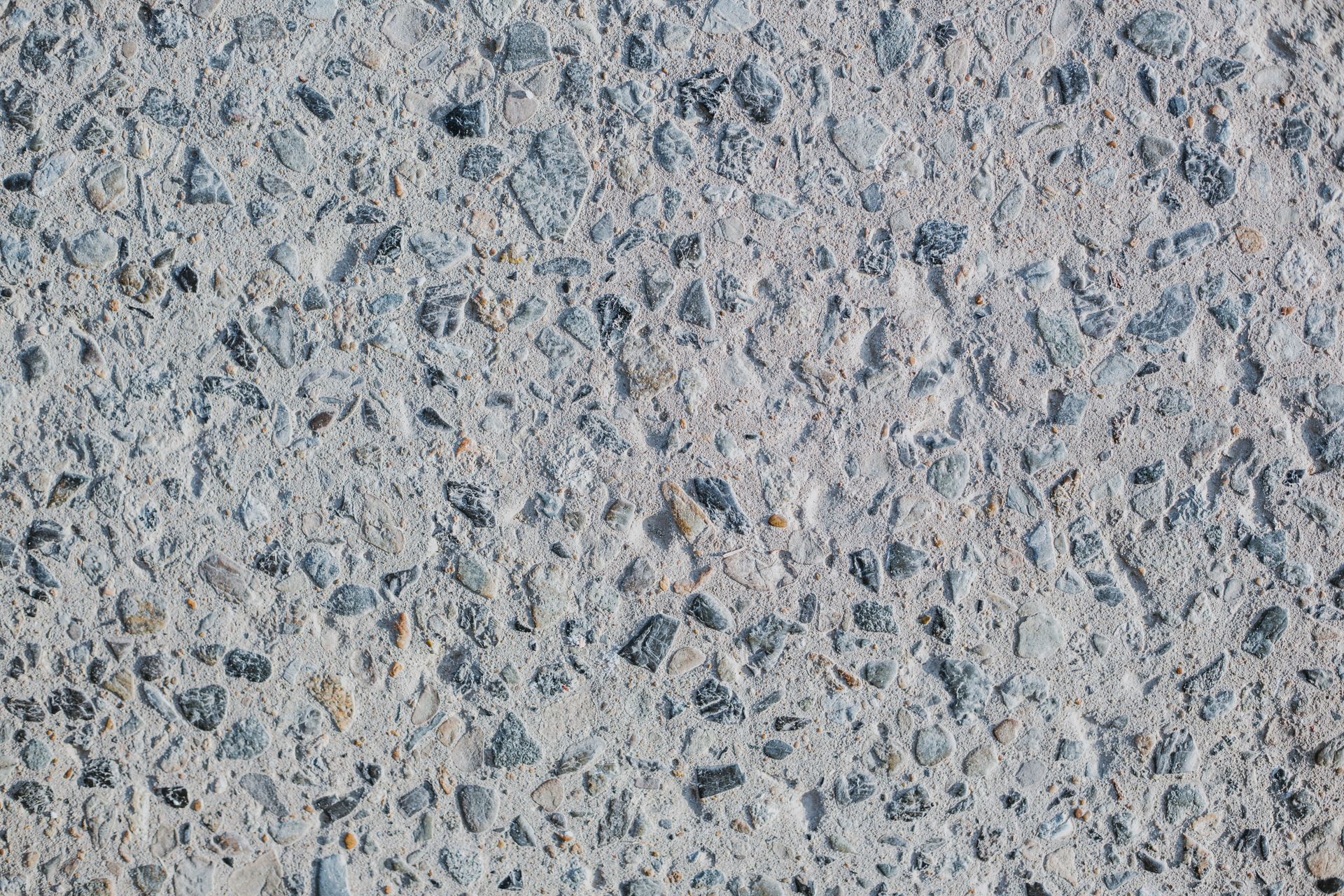
Close-up of a light gray speckled concrete or terrazzo surface
By Grant Cool August 4, 2026
Most people never look twice at a flat gray slab. But show them a driveway flecked with river stone catching the afternoon light, and they slow down. That's the pull of exposed aggregate concrete : it takes an ordinary surface and gives it real character, without giving up the strength concrete is known for. At Farmington Concrete, we believe a good decision starts with good information. So before you commit to a driveway, patio, or pool deck, here's the honest, ground-level rundown on what exposed aggregate is and whether it belongs on your property. In the next few minutes, you'll learn how this finish is built, what it does well, where it shines, and the pitfalls that trip people up. By the end, you'll be able to talk about it like you've poured a few yourself. What Exactly Is Exposed Aggregate Concrete? Every batch of concrete contains aggregate—the stones, pebbles, and sand that give it body and strength. In a standard slab, that aggregate stays hidden beneath a smooth skin of cement paste. Exposed aggregate flips that idea on its head. Instead of burying the stones, we uncover them. The top layer of paste gets removed while the concrete is still setting, so the natural texture and color of the aggregate become the finished surface. Picture a beach where the tide has just pulled back, leaving polished stones on display. That's the visual you're after. The best part? The concrete underneath loses none of its structural muscle. You get a decorative surface and a workhorse foundation in the same pour. Quick takeaway: exposed aggregate is regular concrete with the good stuff brought to the surface on purpose. How Exposed Aggregate Concrete Is Made A great finish comes down to method and timing. Here's how the process actually unfolds on a job site. Step 1: Mixing and Pouring We start by preparing the concrete and formwork, exactly as we would for any slab. The site is graded, the forms are set, and the concrete is poured and screeded level. If the decorative stones are blended into the batch, they go in at this stage. Step 2: Placing the Aggregate — Seeding vs. Integral There are two ways to introduce the decorative stone, and the choice affects both look and cost. Seeding method: Decorative aggregate is scattered evenly across the wet surface, then pressed down with a float until it's set into the top layer. This lets us feature a specific, premium stone right where it'll be seen. Integral method: The aggregate is mixed throughout the entire batch before pouring. Wherever the surface is exposed, stone appears—no separate seeding step required. Seeding gives you more control over the showpiece stone; the integral approach is often simpler and consistent throughout. Step 3: Exposing the Surface This is the make-or-break moment. Before the slab fully hardens, we wash and brush away the thin skin of cement paste to reveal the stones beneath. Get the timing right and the surface comes out crisp and even. Move too soon and stones pop loose; wait too long and the paste sets like armor. Reading that window correctly is where hands-on experience pays off. Step 4: Sealing and Finishing Once the surface has cured and been cleaned, we apply a quality sealer. Sealing deepens the stone color, blocks stains, and adds a soft sheen that makes the aggregate stand out. It's the finishing touch that protects everything that came before it. Quick takeaway: the pour is routine—the exposure timing is the skill. Key Benefits of Exposed Aggregate Concrete Looks get people interested, but the practical advantages are what seal the deal. Durability That Lasts The tough stones sit right at the surface, so they take the brunt of foot traffic, tires, and weather. That means less surface wear than a plain troweled slab and a finish that holds its character for decades. Natural Slip Resistance Smooth concrete turns slick the moment it gets wet. Exposed aggregate's textured surface gives your feet something to grip, which makes it a smart pick for pool decks, sloped driveways, and any walkway that sees rain or splash. Low Maintenance The busy, stone-flecked surface quietly hides dust, small blemishes, and the wear that would jump out on smooth concrete. A rinse now and then plus periodic sealing keeps it looking sharp with minimal effort. Aesthetic Appeal Few surfaces offer this much design range. You can tune the stone, color, and texture to match your home, your landscaping, or the stonework already on your property—creating a custom look plain concrete can't touch. Real Value You land a high-end, natural-stone appearance for noticeably less than pavers or flagstone. Pair that with its long lifespan, and it's an upgrade that adds genuine curb appeal and resale strength. Quick takeaway: it's rare to get beauty, safety, and toughness in one surface—this delivers all three. Where Exposed Aggregate Works Best You can pour it almost anywhere concrete goes, but a handful of spots really show it off. Driveways: Handles vehicle weight with ease while giving the front of your home a polished, welcoming look. Patios: Turns a basic outdoor slab into a comfortable, textured gathering space with visual depth. Pool surrounds: The slip resistance is the headliner here, and lighter stone choices stay cooler underfoot on hot afternoons. Walkways and paths: Guides the eye through your yard and ties your landscape together, all with sure footing. Try this next: if you're picturing more than one area, run the same aggregate through connected spaces—like a driveway that flows into a matching front walk—for a seamless, intentional look. Design Options to Make It Yours The word "exposed" only scratches the surface. This finish is highly customizable across four main levers. Aggregate type: Rounded river rock reads smooth and organic, while crushed granite or limestone gives sharper, more angular texture. Recycled glass or shells can create a one-of-a-kind statement. Color: Stone ranges from warm tans and rusty reds to cool grays, deep blacks, and clean whites. You can also tint the surrounding concrete to complement or contrast the stone. Exposure depth: A light exposure barely reveals the stone tops for subtle texture; a deeper exposure showcases more of each stone for a bolder, chunkier feel. Aggregate size: Fine pebbles produce a refined, even finish, while larger stones make a dramatic impression. Project scale often points you toward the right choice. Try this next: always look at physical samples outdoors before you decide. Color and depth photograph poorly, and afternoon light changes everything. Maintenance Tips to Keep It Looking Great The upkeep is refreshingly simple. A light routine keeps the surface fresh for years. Rinse often. A quick pass with the garden hose clears leaves and grit before they settle into the texture. Clean gently. For a deeper clean, use mild soap, water, and a stiff broom. Skip harsh acids and solvents that eat away at the sealer. Reseal on schedule. Plan to reseal every two to three years, sooner in high-traffic or sun-baked areas. Treat spills fast. Blot up oil, grease, and grill drippings quickly so they don't sink in. Watch the joints. Pull weeds early in walkway seams before roots gain a foothold. Try this next: each spring, splash a little water on the surface. If it soaks in instead of beading up, your sealer is due for a refresh. Common Mistakes to Avoid Even a great material disappoints when the details go wrong. Steer clear of these. Hiring the inexperienced. The exposure window is short and unforgiving. Poor timing leaves loose stones, bald patches, or an uneven finish. Skipping the sealer. An unsealed surface stains easily and dulls fast. Sealing isn't a luxury—it's protection. Choosing stone from a screen. Colors and textures behave differently in person and at full scale. Review real samples first. Ignoring drainage. Like any slab, it needs proper slope so water sheds instead of pooling and undermining the concrete. Getting the mix wrong. The ratio of aggregate to concrete affects both strength and appearance. A sloppy mix compromises the whole surface. Quick takeaway: most failures trace back to rushed timing or cut corners—both avoidable with the right crew. Frequently Asked Questions Is exposed aggregate more expensive than plain concrete? Yes, somewhat. The decorative stone and the extra labor to expose and seal it add cost over a basic finish. But it typically runs well below natural stone or pavers while offering a comparable premium look and better durability. How long does it last? With solid installation and regular resealing, it can perform for decades. Because the durable aggregate sits at the surface, it wears more gracefully than a standard troweled slab. Is it slippery when wet? Quite the opposite. The textured surface delivers natural traction, which is exactly why it's popular around pools and on walkways. Can I add it over my existing concrete? Not directly—exposed aggregate is created during the pour itself. In some cases a decorative overlay can achieve a similar effect, but an on-site look tells us what's realistic for your slab. Does it get hot in the sun? Like any outdoor surface it warms up, but lighter-colored stone stays noticeably cooler. That's a smart choice for pool decks and sun-drenched patios. How often should I reseal it? Every two to three years is a good baseline. When water stops beading on the surface, it's time. Ready to Bring Your Concrete to Life? Exposed aggregate concrete blends the strength and value of concrete with the beauty and grip of natural stone. It resists slips, shrugs off years of use, hides everyday wear, and lets you design a surface that fits your home perfectly. The catch is that the results live or die on precise timing and thoughtful design—which is exactly where an experienced local team makes all the difference. That's our specialty. Farmington Concrete helps homeowners understand their options, pick the right stone and finish, and get a surface built to last. From driveways and patios to pool surrounds and walkways, we bring the skill and local know-how to do it right the first time. Reach out to Farmington Concrete today to talk through your project—and let's pour something you'll be proud to show off for years to come. Meta Title: The Complete Rundown on Exposed Aggregate Concrete | Farmington Concrete Meta Description: Get the full rundown on exposed aggregate concrete—how it's made, its benefits, applications, and design options. Farmington Concrete helps you choose with confidence.
Small orange flames flicker across a dark floor in a black background.
By Grant Cool July 31, 2026
There's a moment every backyard can have. The kind where the temperature drops just enough, someone lights a fire, and the whole atmosphere shifts. Conversation slows. People pull their chairs in closer. What was a plain patio ten minutes ago now feels like the best spot in the house. That's what a thoughtfully built fire feature does—and Farmington Concrete specializes in making it happen. We work with homeowners throughout the area to design and build fire features that are rooted in concrete: durable, personalized, and built to handle real conditions for the long haul. Whether you're starting from scratch or upgrading an existing patio, this guide will help you understand your options and make the right call. We'll walk through: The fire feature types that work best with concrete Why concrete is the strongest material for the job Key design and safety decisions to make before you build Pitfalls to steer clear of—and answers to common questions Why Concrete Is the Right Foundation for Fire Features Before we get into the options, it's worth understanding why concrete and fire features are such a natural match. Concrete doesn't ignite. It doesn't warp. It doesn't splinter or corrode the way wood and metal do when exposed to repeated heat cycles. That physical resilience means a fire feature built in concrete can outlast almost any alternative—often by decades. Beyond durability, concrete gives you genuine creative freedom. It can be poured, stamped, stained, polished, or textured. You can color it to blend with your existing patio or make it stand out as a centerpiece. That versatility lets us tailor every feature to your yard, your taste, and the way you actually use your outdoor space. Fire Feature Options to Consider Built-In Fire Pits A built-in concrete fire pit is the most popular starting point for good reason. It's permanent, functional, and versatile enough to serve a wood flame or a gas burner depending on your preference. The poured concrete construction gives it a natural weight and permanence that portable units simply can't replicate. What to think about: Nail down your fuel type first. Wood fires deliver that irreplaceable smell and crackle—but they require storage space and post-fire cleanup. Gas runs cleaner, ignites instantly, and requires no wood-hauling, but it needs a dedicated fuel line during the build. Fire Tables A fire table functions exactly as the name suggests—part table, part fire feature. A gas burner runs along the center while the concrete surface wraps around it, giving guests space to set glasses, plates, or elbows while staying close to the warmth. It's an especially smart choice for covered patios or dining areas where you want fire to be part of the atmosphere without taking over the whole space. What to think about: Height is critical. Lounge seating calls for a lower table profile; dining setups need more clearance. Getting this wrong makes the feature awkward to use no matter how good it looks. Concrete Fire Bowls Fire bowls occupy a more sculptural category. Cast as freestanding rounded vessels, they make a strong visual statement and can be positioned almost anywhere—alongside a pool, flanking a garden entrance, or anchoring the corners of a terrace. Concrete gives them mass and stability that lighter materials can't match. What to think about: Pairing two identical bowls on opposite sides of a focal point—an entryway, a fireplace, a pool edge—creates a formal symmetry that reads as intentional and refined. Pit Surrounds and Seating Walls A fire pit surround is the concrete border, ledge, and optional seating wall that frames the pit itself. More than a finishing touch, a well-built surround defines the entire gathering area. It determines where people sit, how they face the fire, and whether the whole setup feels casual or architectural. What to think about: Make the surround ledge wide enough to double as seating. A 16- to 18-inch cap gives people a comfortable perch without requiring additional patio furniture crowded around the pit. Flush In-Ground Fire Pits An in-ground design sits level with the surrounding patio surface—no raised edge, no visible structure. The result is a clean, modern look that keeps the visual field open and integrates the fire feature into the patio rather than on top of it. These work especially well in minimalist outdoor spaces where clutter or visual bulk would detract from the design. What to think about: Drainage is essential. Without a proper plan for water runoff, an in-ground pit becomes a puddle every time it rains. This detail needs to be solved during the design phase, not after. Outdoor Concrete Hearths For homeowners looking to go further, an outdoor hearth brings architectural weight to the backyard. Think of it as a full fireplace base or a raised platform designed for a vertical flame feature. Concrete hearths anchor major outdoor living zones and pair beautifully with natural stone, tile veneer, or smooth stucco finishes. What to think about: A hearth is a statement piece. Treat it as a structural decision, not a decorative one—it will organize the flow of your entire outdoor space around it. Design Decisions Worth Getting Right A fire feature that looks incredible in isolation can feel out of place if it doesn't match the surrounding environment. Before we break ground on any project, here are the decisions we work through with every client. Shape: Circular forms create a convivial, campfire feeling. Rectangular or linear shapes feel more contemporary and structured. Your existing patio geometry is usually the best guide. Surface treatment: A smooth, polished finish gives concrete a sleek appearance that suits modern homes. Exposed aggregate, board-form texturing, or stamped patterns add warmth and visual interest. Color: Integral pigments and acid stains let us match or complement your existing concrete. A cohesive color palette across your outdoor space makes everything look planned and intentional. Scale: Bigger isn't always better. Oversizing a fire feature for the available space makes it feel imposing rather than inviting. We'll help you find the right proportion. Fuel source: Gas requires a properly installed line—a decision that affects the build plan from the start. Don't wait until you're already in the project to settle this. Safety Fundamentals You Shouldn't Skip Concrete is inherently fire-resistant, which gives every project a solid safety baseline. But building safely goes beyond material selection. Maintain generous clearances. Every fire feature needs adequate open space between it and your home's siding, overhead structures, fencing, tree canopy, and anything else combustible. Specify heat-rated materials. Concrete formulations vary in their ability to withstand repeated high temperatures. Standard mixes may crack over time. We use heat-appropriate materials and internal reinforcement designed for long-term performance. Design for airflow. Combustion requires oxygen, and enclosed or poorly ventilated fire features can underperform or create hazardous conditions. Hire licensed professionals for gas work. This is non-negotiable. Gas line installation and connections must be handled by a licensed technician—never as part of a DIY approach. Have suppression tools nearby. Whether it's a fire extinguisher rated for outdoor use, a water source, or a bucket of dry sand, keep something close at hand when a fire is burning. Extinguish completely before leaving. Embers stay hot long after flames die down. Ensure the fire is fully out before going inside, and always keep children and pets at a safe distance. Mistakes That Cost Homeowners Time and Money Most regrettable fire feature outcomes stem from a handful of avoidable decisions. Using generic concrete without heat consideration. Ordinary concrete applied without heat-rated liners or proper mix design can fracture as the material expands and contracts under fire. It's a problem that typically shows up after the fact. Placing the feature in the wrong spot. A fire pit that sits too close to a fence, in the path of foot traffic, or directly under a pergola creates safety problems and practical frustrations that no amount of good design can fix. Committing to gas or wood too late. Retrofitting a gas burner into a built fire pit that wasn't designed for it is expensive and sometimes impossible without rebuilding. Decide early. Ignoring water management. For in-ground or low-profile features especially, poor drainage is a persistent headache. It needs to be engineered in from the start. Treating it as a standalone purchase. A fire feature that clashes with your existing patio materials, seating arrangement, or home style is a missed opportunity. It should be designed as part of your outdoor space, not dropped into it. Frequently Asked Questions Is concrete a good choice for fire feature construction? It's one of the best. Concrete handles heat well, lasts for decades with proper care, and gives you more design flexibility than virtually any alternative. The key is using the right concrete mix and heat-rated components—which is where professional installation makes a measurable difference. Wood or gas—which is better? Neither is universally superior. Wood creates a more primal, aromatic experience that many homeowners prefer for casual gatherings. Gas offers precision control, easy ignition, and no cleanup—advantages that matter to homeowners who use the feature frequently. We'll help you weigh the tradeoffs for your specific situation. Can I add a fire feature to a patio that's already been poured? In many cases, yes. Freestanding options like fire bowls or certain fire table configurations work well on existing surfaces. In-ground pits and full surrounds are more involved and typically work best as part of a larger patio project. We'll assess what your current setup allows before making a recommendation. What kind of ongoing maintenance does a concrete fire feature require? Less than most people expect. Concrete is inherently low-maintenance. Periodic cleaning removes soot and debris, and sealing the surface every year or two keeps it protected and looking sharp. Gas systems should be inspected annually to confirm all connections are sound. How do I prevent cracking? Cracking is a legitimate concern in any fire feature, but it's largely preventable with the right materials and construction approach. Heat-rated concrete, proper reinforcement, and quality installation all contribute to a feature that holds its form for the long term. What fire feature makes the most sense for a smaller outdoor space? A compact concrete fire bowl or a modest in-ground pit works particularly well when space is limited. Both deliver genuine warmth and visual impact without demanding a large footprint. Ready to Build Something Worth Gathering Around? A fire feature isn't just a landscaping upgrade—it's a change in how you live outdoors. The right one extends your outdoor season, gives guests a reason to stay, and turns a functional concrete surface into something people actually want to spend time around. Farmington Concrete brings the expertise to make that happen correctly: heat-rated materials, thoughtful design, and professional installation that stands behind the finished product. We work with each client to understand their space, their style, and how they want to use it—then we build something that fits all three. Get in touch with Farmington Concrete to start the conversation. Bring your ideas, your questions, and photos of your space. We'll help you figure out exactly what your patio has been waiting for. Meta Title: Concrete Fire Features That Elevate Any Outdoor Space | Farmington Concrete Meta Description: Fire pits, fire tables, bowls, hearths, and in-ground designs—Farmington Concrete helps homeowners choose and build fire features that enhance concrete surfaces and stand the test of time.
Modern kitchen with built-in oven, marble island, fruit bowl, and wine glass on the counter
By Grant Cool July 14, 2026
Concrete has come a long way from the plain gray slab most people picture. Today it's one of the most creative surfaces you can bring into your home—capable of mimicking stone, glowing with embedded glass, or warming your feet on a cold morning. If you think of concrete as basic, you're about to be surprised. At Farmington Concrete, we help homeowners transform ordinary concrete into standout features that fit their style and their space. In this post, you'll discover the coolest add-ons and design options available for concrete surfaces, from decorative finishes and embedded objects to custom coloring, engraving, epoxy coatings, radiant heating, and edge profiles. You'll also get practical tips for each, answers to common questions, and a clear next step for bringing your ideas to life. Here's what we'll cover: Decorative finishes that change the entire look Embedded objects for a one-of-a-kind surface Custom coloring options Engraving, patterns, edge profiles, and functional upgrades like heating Decorative Finishes That Transform the Look The finish you choose sets the tone for the whole surface. These three options are the most popular for a reason. Stamped Concrete Stamped concrete uses molds pressed into fresh concrete to mimic brick, slate, cobblestone, wood planks, and more. You get the look of premium materials at a fraction of the cost, without the grout lines or shifting pavers. It's a favorite for patios, driveways, and walkways. Exposed Aggregate This finish reveals the natural stones within the concrete for a textured, pebbled surface. Beyond looking great, it offers excellent slip resistance, which makes it a smart pick for pool decks and outdoor steps. Polished Concrete Grinding and polishing the surface creates a sleek, glossy finish with real depth. Polished concrete is low-maintenance, resists stains, and brings a modern, refined edge to floors indoors. Practical tip: Match the finish to how you'll use the space. Smooth polish suits interior floors, while textured exposed aggregate is safer where things get wet. Embedded Objects for a One-of-a-Kind Surface Want a surface no one else has? Embedding objects into concrete makes that possible. During the pour or finishing stage, we can set materials right into the surface for a truly custom look. Stones and pebbles for a natural, organic feel Recycled or colored glass that catches the light and adds sparkle Seashells for a coastal, personal touch Tile fragments or metal accents for artistic detail Embedded features work beautifully as focal points—think a decorative border, a countertop with glimmering glass, or a patio inlay that becomes a conversation piece. Practical tip: Objects near the surface need proper sealing to stay secure and protected. This is precise work best handled by a professional to avoid loose or uneven results. Custom Coloring Options Color is where concrete really becomes yours. There are three main ways to add it, each with its own effect. Integral Pigments Pigment is mixed into the concrete before it's poured, running color all the way through the material. The result is a consistent, lasting tone that won't fade or chip away over time. Acid Staining Acid stains react chemically with the concrete to create rich, variegated, marbled tones. No two stained surfaces look exactly alike, giving you depth and character that's impossible to replicate. Dyes Concrete dyes offer bold, vibrant, and precise color options. They're great when you want a specific shade or a more uniform, saturated look. Practical tip: Combine methods for stunning results—an integral base color with acid-stain accents, for example. We can show you samples so you know exactly what to expect before we commit. Engraving and Custom Patterns Engraving cuts designs, borders, or patterns directly into cured concrete. It's a subtle but striking way to personalize a surface. Popular options include geometric patterns, tile-look grids, medallions, and even custom logos or family monograms. Engraving pairs especially well with staining, since the cut lines and color work together to define the design. Practical tip: Engraving works on both new and existing concrete, so you can refresh a plain slab you already have without a full replacement. Epoxy Coatings for Style and Protection Epoxy coatings do double duty: they look fantastic and protect the surface underneath. Applied over concrete, epoxy creates a durable, seamless layer that resists stains, chemicals, and abrasion. The design possibilities are impressive: Metallic epoxy with swirling, three-dimensional depth Flake or chip systems for a speckled, textured look Solid colors for a clean, glossy finish Epoxy is a top choice for garage floors, basements, and high-traffic areas where durability matters as much as looks. Practical tip: Surface prep makes or breaks an epoxy job. Proper cleaning, etching, and curing are essential for a coating that lasts—another reason to trust professional installation. Radiant Heating Beneath Concrete Here's a feature that turns concrete from cool to cozy. Radiant heating systems install beneath the surface, warming the concrete from below and radiating comfortable heat into the room. It's an efficient way to heat floors evenly, eliminate cold spots, and enjoy warm surfaces underfoot on chilly mornings. Because concrete holds heat well, it's an ideal partner for radiant systems. Practical tip: Radiant heating has to be planned before the pour, so bring it up early in the design conversation. Retrofitting later is far more difficult and costly. Custom Edge Profiles Edges are easy to overlook, but they shape how finished a surface feels. Custom edge profiles let you define the border of countertops, patios, and steps. Options range from clean, square modern edges to rounded bullnose profiles and decorative chiseled or beveled looks. The right edge ties the whole design together and adds a polished, intentional touch. Practical tip: Consider function alongside style. Rounded edges are safer in homes with small children, while crisp square edges lean contemporary. Common Mistakes to Avoid A few missteps can undercut even the best design ideas. Keep these in mind: Skipping the sealer. Decorative finishes, colors, and embedded objects all need proper sealing to stay protected and vibrant. DIY on complex features. Stamping, embedding, and epoxy require skill and timing. Rushed or amateur work often shows. Planning heating too late. Radiant systems must be installed before the pour—decide early. Ignoring the setting. Choose finishes and colors that complement your home and hold up to how the space is used. Frequently Asked Questions Can these features be added to existing concrete? Some can. Engraving, staining, epoxy coatings, and polishing often work on existing surfaces. Others, like embedded objects, stamping, and radiant heating, need to be done during a new pour. Which decorative finish is most durable? All hold up well when sealed properly. Epoxy and polished concrete are especially tough for high-traffic areas, while stamped and exposed aggregate excel outdoors. Do colored or decorative surfaces need special maintenance? Not much. Regular cleaning and periodic resealing keep colors vibrant and finishes protected for years. Is radiant heating worth it under concrete? For many homeowners, yes. Concrete holds and radiates heat efficiently, making it a comfortable, even, and cost-effective way to warm a space. Can I combine multiple features? Absolutely. Many of the best results mix finishes—like a stamped patio with custom color and a decorative edge, or a polished floor with engraved accents. How do I know which features fit my project? That's where a local expert helps. We assess your space, style, and goals, then recommend the options that work best together. Bring Your Concrete Ideas to Life Concrete is far more versatile than most people realize. With decorative finishes, embedded objects, custom coloring, engraving, epoxy coatings, radiant heating, and tailored edges, you can turn a plain surface into a true design feature. The key is choosing the right combination for your space—and installing it correctly so it lasts. That's exactly what we do. Farmington Concrete works with you from first idea to final finish, helping you explore creative options and bring them to life with expert local craftsmanship. Contact Farmington Concrete today to talk through the features you're dreaming about—and let's design a concrete surface that's uniquely yours. Meta Title: Cool Concrete Surface Features | Farmington Concrete Meta Description: Discover creative features for your concrete surfaces—stamped finishes, embedded glass, custom color, epoxy, radiant heat, and more. Farmington Concrete can help.

Book a Service Today